Blowing cold. Outdoor fan not turning. Error code on the remote noted. House at nine degrees.
The season turns and every unit rings on the same morning
Answering for heat pump and air conditioning work, on both sides of the Tasman. Every caller picked up at once, the no-heat and no-cool ones sorted first, and the servicing pushed into the quiet weeks.
9:41
Monday, 31 August9:41
Brand and model taken on the call, so you know what you are driving to before you leave.
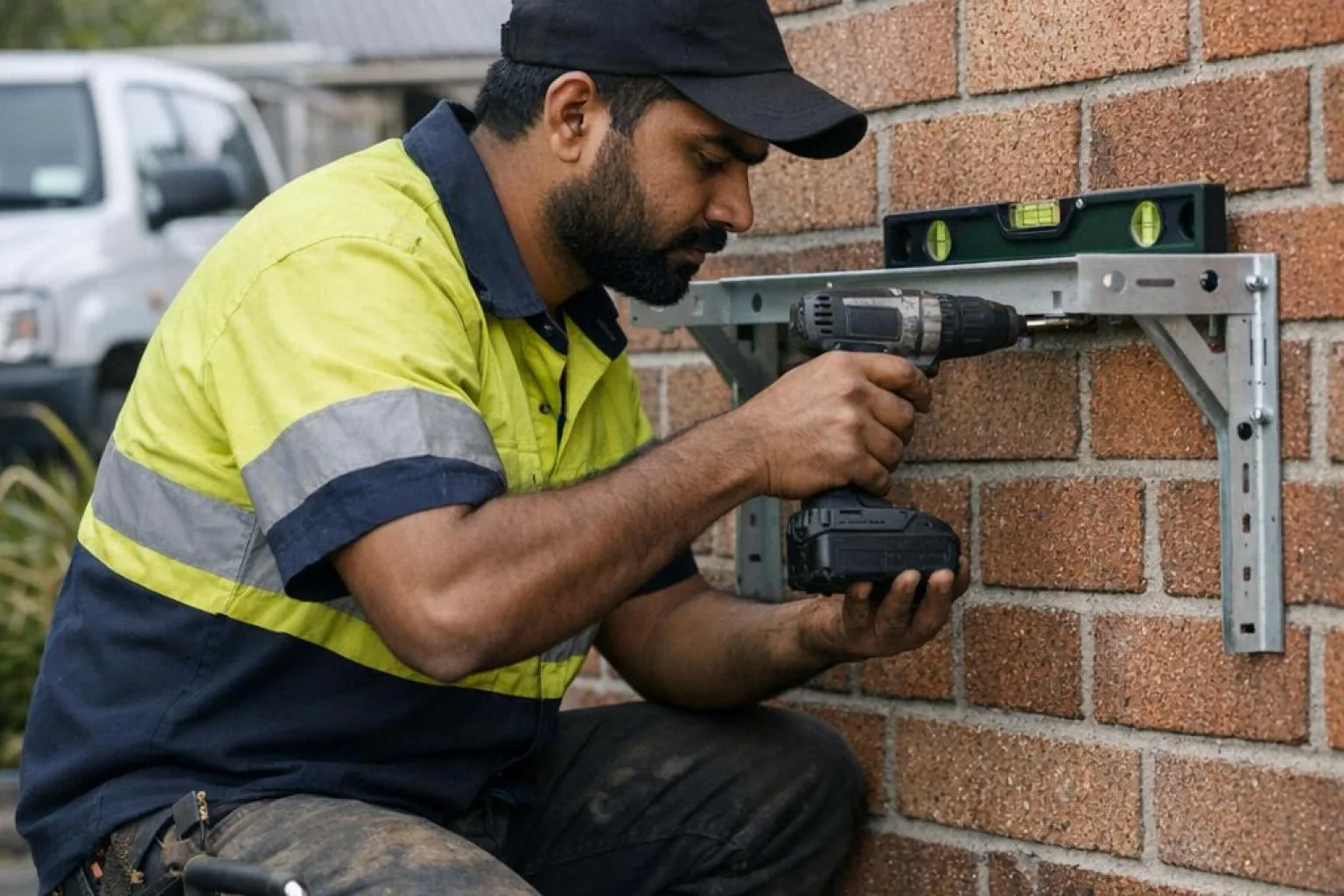
The same trade, two words for it, two opposite seasons
In New Zealand it is a heat pump and the phone goes mad when the first cold snap arrives. In Australia it is air conditioning and the same thing happens on the first forty degree week. The rush is identical. Only the month and the word change.
New Zealand
Heat pumps, and a cold house
It answers on a New Zealand number, in a New Zealand voice, and it calls the thing a heat pump because that is what your customer just said. A house at nine degrees with a baby or an older person in it is treated as urgent and reaches your mobile, not a message list.
Australia
Air con, and a house that will not cool
It answers on an Australian number, in an Australian voice, and it says air conditioning, split system and ducted. A heatwave with somebody unwell in the house, or a business with stock in a chiller, is the same urgent call in the other direction.
Your calls stay in your own country. New Zealand numbers are +64 and those calls are handled in New Zealand data centres. Australian numbers are +61 and those calls are handled in Australia. Neither crosses the Tasman to be answered.
A breakdown and an install are not the same call
Most services take both of them down the same way, which is why you end up ringing everybody back. These get different questions, because they need different answers.
9:41
Monday, 31 August9:41
Wall unit, about eight years old, blowing cold. Outdoor fan not turning. Code showing on the remote.
Elderly resident at home all day. Marked urgent under your rules.
First slot tomorrow held. Caller told the time honestly, not guessed at.
Brand and age
Which brand is on the wall and roughly how old it is. Half the diagnosis, and the difference between a part in the van and a part on back order.
What it is doing
Blowing cold when it should be hot, running and not reaching temperature, dripping inside, or dead. Described in the customer's own words and written down as they said it.
Any error code
Whatever is showing on the remote or flashing on the indoor unit, read back and taken down character by character. It is the single most useful thing on a breakdown call and almost nobody asks for it.
Outdoor unit
Whether the fan outside is turning at all, and whether the breaker has tripped. Two questions that sort a service call from an electrical one before you drive anywhere.
Who is in the house
A baby, somebody elderly, somebody unwell. You set the rule and the call is escalated on it, because no heat in July and no cooling in January are not the same as an inconvenience.
On an install
Room sizes, ceiling height, the age of the house and whether there is insulation. Enough to book a real site visit rather than quote a unit that will be undersized on the first cold night.
What it will not do
It does not diagnose a fault down the phone and it does not size a unit off a description. A burning smell or a breaker that keeps tripping stops being a servicing question: the caller is told to turn it off at the wall and it reaches you as urgent. It is reception, not a technician.
The fault is written up before you are off the bracket
The domestic side and the commercial servicing side usually live in different software, so both are covered.
Fergus

The fault or the install is written into Fergus against the customer and the site, with the brand, the symptom and the error code in the notes. Existing Fergus contacts are matched on the way in, and where you have asked us to, the diary is read before a time is offered, so a cold house can be told when somebody is genuinely coming.
Simpro

The commercial servicing side, and more common on the Australian half of this market. Contacts are matched on the way in, the enquiry is written in with the customer and the site linked rather than opened as a stranger, and a visit is scheduled against a technician who is genuinely free.
ServiceM8
The caller is matched to your client list, told what stage their job is at, and the job is lodged with the site address on it. Worth knowing while you compare: ServiceM8 sells its own AI phone agent, it is live in New Zealand, and using it means moving your number onto their phone add-on. We never ask you to move your number, and we connect to ServiceM8 either way.
Xero

Your service contract customers are recognised from your Xero contacts the moment they ring, so the cafe with six rooftop units is not handled like a cold enquiry off an ad. Invoice questions get a straight answer instead of a message taken, and card details are never read out over the phone.
Running something else? Tell us what you use and we will quote the integration work.
Three weeks of the year decide the whole year
The first cold snap and the first heatwave are when the phone rings eleven times before lunch and every one of those callers is trying two other numbers as well.
Everybody is answered at the same moment, so nobody hears an engaged tone. The no-heat and no-cool households are triaged and told honestly when somebody can get there, and the routine servicing is booked into the weeks after the rush instead of clogging the same three days.
Out of hours works the same way. It can hold the details until morning, or ring you and keep ringing down a roster until somebody answers. There is a whole site about that at callanswering.co.nz.
Servicing is the quiet money
The service calls that arrive during the rush are the ones that get lost, because they are never the loudest caller. Booked into a quiet week instead, they are the work that fills the shoulder season.
Get set up
Give us the number and tell us what counts as urgent in a cold or a hot house. We do the rest and ring you before it answers anything.
Your number
You keep it. You divert your existing number to us and you can turn that divert off from your own handset whenever you want.
Set up
Your account opens straight away. Your agent is built and trained within 24 hours, and we walk you through it first.
Which market
New Zealand, Australia or both. You get the right number, the right voice and the right word for the machine on the wall.
Not on heat pumps
Electricians
Switchboard age, half the house dead, and the burning smell that changes everything.
Plumbers
The toby, the ceiling and the nine at night call that pays for the month.
Roofers
Eleven calls in the storm hour, every one of them answered at once.
Every trade is along the top of the page, and why us is the short version of what makes this different from the rest of them.
Answer the whole cold snap
Your account opens straight away and your agent is built within 24 hours. No card, and nothing answers your phone until you have heard it and said yes.